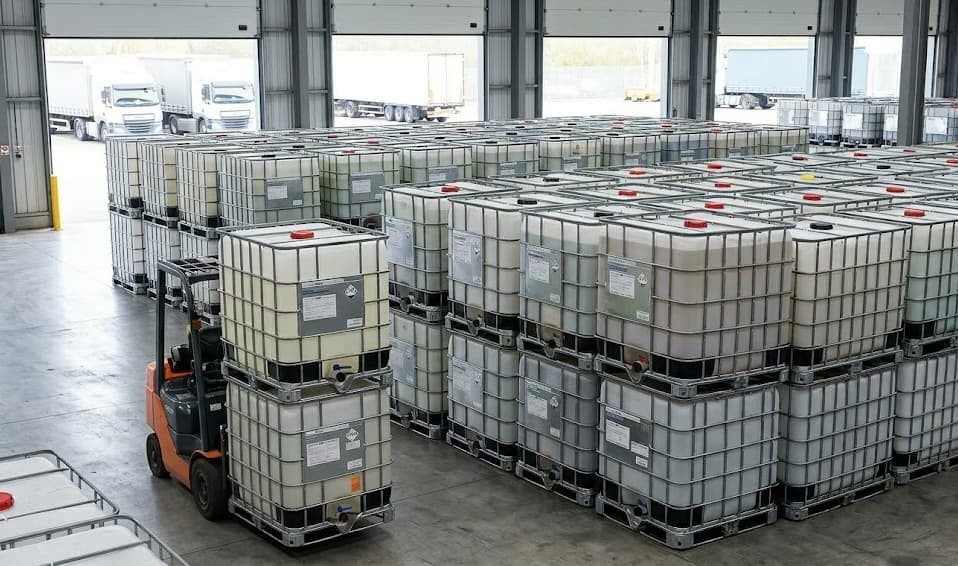
IBC Types & Grades
Everything you need to know about IBC tote classifications, material grades, condition ratings, and regulatory certifications. Make informed decisions for your specific application.
Not Sure Which Grade You Need?
Our team can help you choose the right IBC type and grade for your application. Get expert guidance today.
Get Your Free Quote
Fill out the form and our team will get back to you within 24 hours with a customized solution.
0 of 8 required fields completed
What to Expect
Submit your request details
Receive a quote within 24 hours
Schedule pickup or delivery
Why Choose Us
Prefer to talk? Call us directly:
(313) 555-1234Food-Grade vs Industrial vs Hazmat
The primary classification of an IBC tote depends on what it was originally manufactured to contain and what certifications it carries. This determines what it can legally and safely be used for.
Food-Grade IBC
Manufactured from FDA-compliant HDPE resin and certified for direct contact with food products, beverages, potable water, and pharmaceutical ingredients. These totes undergo the strictest quality controls during manufacturing.
Key Certifications
- - FDA 21 CFR 177.1520 compliant resin
- - EU Regulation 10/2011 (if exported)
- - NSF/ANSI 61 for potable water
- - Kosher and Halal certifiable
- - cGMP (Current Good Manufacturing Practice)
- - FSMA (Food Safety Modernization Act) compliant
Common Contents
- - Fruit juices, syrups, and concentrates
- - Edible oils and vinegars
- - Potable and purified water
- - Pharmaceutical intermediates
- - Food-grade cleaning agents
- - Wine, spirits, and brewing ingredients
- - Dairy products (whey, cream, liquid milk)
- - Honey and molasses
Identifying Features
- - Natural/white HDPE bottle (translucent)
- - FDA/food-grade label on bottle or cage
- - Lot number and resin traceability code
- - Clean, odor-free interior
Important Notes
Once a food-grade IBC has been used for non-food chemicals, it cannot be re-certified as food-grade. Always verify the previous contents before purchasing for food use. HDPE is a semi-porous material and can absorb trace contaminants that cannot be washed out.
Industrial-Grade IBC
The most common category, covering a wide range of non-food applications. Industrial IBCs are built with the same high-quality HDPE but are not subject to food-contact regulations. They offer the best value for general-purpose liquid storage and transport.
Typical Applications
- - Soaps, detergents, and cleaning chemicals
- - Lubricants and automotive fluids
- - Paints, coatings, and adhesives
- - Agricultural chemicals and fertilizers
- - Non-potable water storage
- - Coolants and antifreeze
- - Degreasers and surfactants
- - Concrete admixtures and sealants
- - Dust suppression and de-icing fluids
Advantages
- - Lower cost than food-grade
- - Wide availability (new and used)
- - Suitable for most business operations
- - Can be rebottled and reused multiple times
- - Available in all sizes and configurations
- - Minimal documentation requirements
Important Notes
Always check chemical compatibility with HDPE before use. Some aggressive solvents (like acetone, toluene, or methyl ethyl ketone) will degrade the plastic over time. Refer to our chemical compatibility chart below for specific substances.
Hazmat-Rated IBC
Specifically designed and certified for the storage and transportation of hazardous materials. These IBCs must pass rigorous UN performance testing and carry permanent markings indicating their certification level.
Required Certifications
- - UN 31HA1 (composite IBC, rigid plastic inner, steel cage)
- - DOT Special Permit (when applicable)
- - Packing Group I, II, or III rated
- - Must pass drop, stacking, pressure, and leakproof tests
- - Vibration test (per 49 CFR 178.819)
- - Bottom lift and top lift tests
Hazard Classes Covered
- - Class 3: Flammable liquids
- - Class 5.1: Oxidizing substances
- - Class 6.1: Toxic substances
- - Class 8: Corrosive substances
- - Class 9: Miscellaneous dangerous goods
UN Performance Tests Required
- - Drop test: 0.8m (PG I), 1.2m (PG II/III)
- - Stacking test: 1.8x max gross weight x 28 days
- - Hydrostatic pressure test: 20-100 kPa
- - Leakproofness test: 20 kPa for 10 minutes
Important Notes
UN-rated IBCs have a defined service life (typically 5 years from manufacture). After expiry, they must be retested or decommissioned. Using an expired or non-rated IBC for hazmat is a federal violation under 49 CFR and can result in fines up to $75,000 per violation.
Understanding UN/DOT Ratings
Every IBC tote designed for hazardous materials carries a UN marking. Here's how to decode the information stamped on the container.
Example UN Marking
UN 31HA1
31 = IBC type (rigid composite)
H = HDPE inner container
A1 = Steel outer cage with welded frame
Y
Packing Group rating:
X = PG I, II, III (most dangerous)
Y = PG II, III (moderate danger)
Z = PG III only (least dangerous)
04 23
04 = Month of manufacture
23 = Year of manufacture
Service life: 5 years from this date
USA
Country of manufacture and certification authority. Other codes: D (Germany), F (France), GB (UK), CDN (Canada).
+AA1234
Manufacturer's identification code and unique serial number for traceability. The "+" prefix indicates the IBC meets all UN packaging requirements.
Specific Gravity
Indicates the maximum density of liquid the IBC is rated for. Standard is 1.2 (water = 1.0). Heavy chemicals may require 1.5 or 1.9 rated IBCs.
Complete UN IBC Type Code Reference
The IBC type code tells you exactly what the container is made of and how it's constructed. Here is the full reference for all UN IBC classification codes.
| Code | Type Number | Description | Common Use |
|---|---|---|---|
| 11A | Metal | Steel IBC, fully welded construction | Extreme hazmat, aggressive chemicals |
| 11B | Metal | Aluminum IBC, welded construction | Lightweight, corrosion-sensitive loads |
| 11N | Metal | Other metal IBC (e.g., stainless steel) | Pharmaceutical, high-purity chemicals |
| 21H | Rigid Plastic | HDPE rigid plastic IBC (no cage) | Non-hazmat bulk liquids, chemicals |
| 31HA1 | Composite | HDPE inner bottle + welded steel cage | Most common hazmat IBC worldwide |
| 31HA2 | Composite | HDPE inner bottle + bolted steel cage | Serviceable cage, easy rebottling |
| 31HB1 | Composite | HDPE inner + welded aluminum cage | Lightweight hazmat applications |
| 31HB2 | Composite | HDPE inner + bolted aluminum cage | Lightweight, serviceable cage |
| 31HH1 | Composite | HDPE inner + rigid plastic outer | Double-wall plastic, niche applications |
| 31HZ1 | Composite | HDPE inner + woven plastic outer | Flexible outer, limited hazmat use |
Packing Groups Explained
The packing group (PG) indicates the degree of danger posed by the hazardous material. It determines the strength of packaging required for safe transport under DOT 49 CFR regulations.
Packing Group I — Great Danger
Reserved for the most dangerous materials. Requires X-rated packaging (the highest strength and integrity level). Very few IBCs carry PG I certification.
- - Drop test height: 1.8m
- - Hydraulic pressure: 100 kPa
- - Examples: Strong acids, reactive oxidizers
- - IBC marking: X
Packing Group II — Medium Danger
For materials presenting medium danger. Requires Y-rated or X-rated packaging. The majority of hazmat IBCs in circulation are Y-rated for PG II/III use.
- - Drop test height: 1.2m
- - Hydraulic pressure: 65 kPa
- - Examples: Many solvents, corrosives
- - IBC marking: Y (or X)
Packing Group III — Minor Danger
For materials presenting relatively low danger. Z-rated packaging is sufficient, though Y and X rated containers are also acceptable (overpacking).
- - Drop test height: 0.8m
- - Hydraulic pressure: 20 kPa
- - Examples: Dilute solutions, low-hazard chemicals
- - IBC marking: Z (or Y or X)
DOT Hazard Classification Table
The Department of Transportation classifies hazardous materials into 9 classes. Here is how each class relates to IBC tote usage and which classes can be stored in composite (31HA1) IBCs.
| Class | Description | Examples | IBC Compatible? | Typical PG |
|---|---|---|---|---|
| 1 | Explosives | Not applicable to liquid IBCs | No | N/A |
| 2 | Gases | Compressed, liquefied, dissolved gases | No (IBCs are non-pressure) | N/A |
| 3 | Flammable Liquids | Ethanol, acetone, gasoline, paint thinners | Yes (31HA1) | I, II, III |
| 4 | Flammable Solids | Not applicable to liquid IBCs | No (solids) | N/A |
| 5.1 | Oxidizing Substances | Hydrogen peroxide, sodium hypochlorite | Yes (check compatibility) | I, II, III |
| 5.2 | Organic Peroxides | MEK peroxide (dilute solutions) | Limited (case-by-case) | N/A |
| 6.1 | Toxic Substances | Pesticide concentrates, cyanide solutions | Yes (31HA1) | I, II, III |
| 6.2 | Infectious Substances | Biomedical waste | No (special containers) | N/A |
| 7 | Radioactive Material | Not applicable to IBC totes | No | N/A |
| 8 | Corrosive Substances | Sulfuric acid, sodium hydroxide, HCl | Yes (31HA1, check SG) | I, II, III |
| 9 | Miscellaneous Dangerous | Lithium battery electrolyte, environmentally hazardous | Yes (31HA1) | III |
Single-Trip vs Multi-Trip
Single-Trip (One-Way)
Designed for a single filling and shipment. After delivery, the IBC is either returned to a recycler (like IBC Recycling Detroit) or properly disposed of. Single-trip IBCs are typically lighter weight with thinner walls and simpler cage construction.
Characteristics
- - Lower initial purchase cost
- - Thinner HDPE walls (0.08" - 0.12")
- - Basic cage construction
- - Not intended for reconditioning
- - Ideal for non-return supply chains
- - Often used for export shipments
- - May have lighter-gauge cage wire
- - Pallet may be wood (one-way)
Recycling tip: Single-trip IBCs are excellent candidates for recycling. We pay top dollar for clean single-trip totes with known previous contents.
Multi-Trip (Returnable)
Built for repeated use across multiple fill-ship-return cycles. Multi-trip IBCs feature heavier construction, thicker walls, and reinforced cages. They're designed to be cleaned, inspected, and reconditioned between each use.
Characteristics
- - Higher initial cost, lower cost-per-use
- - Thicker HDPE walls (0.14" - 0.18")
- - Reinforced cage with heavier tubing
- - Designed for 5 - 7 reconditioning cycles
- - Better for closed-loop supply chains
- - Typically carries UN/DOT certification
- - HDPE or steel pallet (durable)
- - Built-in handling features (tie-down eyes)
Pro tip: Multi-trip IBCs retain their value better. We offer premium pricing for multi-trip totes in good condition, especially those with valid UN dates.
IBC Bottle Colors & Meanings
The color of the HDPE inner bottle is not just cosmetic. It often indicates the intended use, UV protection level, and material grade.
Natural / White
The most common color. Natural (translucent white) HDPE allows visual inspection of fill levels without opening the container. This is the standard for food-grade and pharmaceutical IBCs.
- - Allows visual level checks
- - Standard for food-grade
- - No UV protection
- - Highest resale value
- - Must be stored out of direct sunlight
- - Shows contamination easily
- - FDA 21 CFR 177.1520 standard resin
Blue
Blue-tinted HDPE provides moderate UV protection and is commonly used for chemicals that are sensitive to light. Some manufacturers use blue to indicate industrial or chemical-grade containers.
- - Moderate UV protection
- - Common for chemical storage
- - Semi-translucent (limited level visibility)
- - Good resale value
- - Widely available in used market
- - UV stabilizer additive in resin
- - Suitable for outdoor storage (medium-term)
Black
Black HDPE offers maximum UV protection and is ideal for long-term outdoor storage. The opaque color prevents algae growth in water storage applications. However, it makes level inspection impossible without opening the lid.
- - Maximum UV protection
- - Best for outdoor storage
- - Prevents algae growth
- - Opaque (no level visibility)
- - Popular for rainwater harvesting
- - Carbon black UV stabilizer
- - Slightly lower resale value
- - Not typically used for food-grade
Green (Specialty)
Less common, green-tinted HDPE is occasionally used for agricultural applications or to indicate specific product categories. Some manufacturers use green for their "eco-friendly" or recycled-content product lines.
- - Moderate UV protection
- - Agricultural applications
- - Semi-translucent
- - Limited availability
- - Sometimes indicates recycled resin
- - Regional availability varies
- - Lower demand in resale market
| Application | Natural/White | Blue | Black | Green |
|---|---|---|---|---|
| Food-grade liquids | Recommended | Acceptable | Not typical | Not typical |
| Pharmaceutical | Required | Case-by-case | No | No |
| Potable water | Recommended | Acceptable | No (algae concern) | No |
| Industrial chemicals | Good | Recommended | Good | Acceptable |
| Outdoor water storage | Poor (UV) | Acceptable | Best | Acceptable |
| Rainwater harvesting | Poor (algae/UV) | Acceptable | Best | Acceptable |
| UV-sensitive products | Poor | Good | Best | Good |
| Level monitoring needed | Best | Limited | Not possible | Limited |
| Resale value | Highest | Good | Moderate | Lower |
IBC Cage Types & Coatings
The outer cage protects the inner bottle and provides structural support for stacking, lifting, and transport. The coating type determines longevity and corrosion resistance.
Galvanized Steel Cage
The premium standard. Hot-dip galvanized after welding to ensure complete corrosion protection on all surfaces, including weld joints. The zinc coating provides 15-25 years of outdoor corrosion protection.
Advantages
- - Superior corrosion resistance
- - 15-25 year outdoor lifespan
- - No maintenance required
- - Higher resale value
- - Self-healing zinc coating
Specifications
- - Zinc coating: 1.4 - 2.0 oz/ft²
- - Tube wall: 1.2 - 1.6 mm
- - Welded construction
- - 4-way forklift access
- - ASTM A123 standard
Painted Steel Cage
A cost-effective alternative where the welded steel cage is coated with powder paint or wet paint instead of zinc. Adequate for indoor storage and short-term outdoor use, but prone to chipping and rust when exposed to weather and impact.
Advantages
- - Lower cost
- - Color-coded identification
- - Suitable for indoor use
- - Lighter weight
Limitations
- - Chips and scratches easily
- - Rust develops at damage points
- - 3-7 year outdoor lifespan
- - Lower resale value
- - Requires touch-up maintenance
| Property | Hot-Dip Galvanized | Electro-Galvanized | Powder Coated | Wet Paint |
|---|---|---|---|---|
| Corrosion Resistance | Excellent | Good | Good (when intact) | Fair |
| Zinc Thickness | 1.4-2.0 oz/ft2 | 0.3-0.5 oz/ft2 | N/A (paint layer) | N/A (paint layer) |
| Self-Healing | Yes (sacrificial zinc) | Limited | No | No |
| Chip Resistance | Excellent | Good | Very good | Poor |
| Outdoor Lifespan | 15-25 years | 5-10 years | 5-15 years | 3-7 years |
| Cost (Relative) | Highest | Medium | Medium | Lowest |
| Appearance | Matte silver-gray | Bright silver | Custom colors | Custom colors |
| UN/DOT Compliance | Yes (preferred) | Yes | Yes | Yes |
HDPE Chemical Compatibility Chart
Before storing any chemical in an HDPE IBC tote, verify compatibility. This chart covers the most commonly stored substances. Ratings: A = Excellent (no effect), B = Good (minor effect, long-term OK), C = Fair (moderate effect, short-term only), D = Not Recommended (will degrade HDPE).
| Chemical | Concentration | Rating (20C/68F) | Rating (60C/140F) | Notes |
|---|---|---|---|---|
| Acetic Acid | Up to 50% | A | B | Common in food processing. Vinegar is ~5%. |
| Acetone | 100% | D | D | Will swell and soften HDPE. Do NOT store. |
| Ammonia (aqueous) | Up to 30% | A | A | Common cleaning chemical. Compatible. |
| Bleach (Sodium Hypochlorite) | Up to 12.5% | A | B | Standard pool/industrial bleach. OK. |
| Citric Acid | Saturated | A | A | Food-grade acid. Fully compatible. |
| Diesel Fuel | 100% | B | C | Short-term storage OK. Slight swelling over time. |
| Ethanol | Up to 95% | A | B | Compatible. Used in food and pharma. |
| Gasoline | 100% | C | D | Will cause swelling. Short-term only. Requires UN rating. |
| Hydrochloric Acid | Up to 37% | A | B | Common industrial acid. Compatible with HDPE. |
| Hydrogen Peroxide | Up to 35% | A | B | Common oxidizer. >50% requires special IBC. |
| Isopropyl Alcohol | 100% | A | B | Widely used solvent. Compatible. |
| Methanol | 100% | B | C | May cause slight swelling at elevated temps. |
| Nitric Acid | Up to 50% | A | B | Strong oxidizer. Compatible at ambient. |
| Phosphoric Acid | Up to 85% | A | A | Used in food (cola, rust removal). Compatible. |
| Sodium Hydroxide (Caustic) | Up to 50% | A | A | Strong base. Fully compatible with HDPE. |
| Sulfuric Acid | Up to 70% | A | B | >70% concentrated: B at ambient, D at elevated. |
| Toluene | 100% | D | D | Will dissolve HDPE. Do NOT store. |
| Xylene | 100% | D | D | Aggressive solvent. Not compatible. |
| Water (pure) | 100% | A | A | Fully compatible. The baseline standard. |
| Vegetable Oil | 100% | A | A | Food-grade application. Fully compatible. |
Important:This chart is for general guidance only. Always consult the chemical manufacturer's SDS (Safety Data Sheet) for specific packaging recommendations. Temperature, concentration, and exposure duration all affect compatibility. Contact us if you need advice on a specific chemical.
IBC Condition Grades
At IBC Recycling Detroit, we grade every used IBC tote we process. Our three-tier grading system ensures you know exactly what you're getting. Here's what each grade means.
The highest quality used IBC available. Grade A totes look almost new and meet the strictest standards for cleanliness and structural integrity.
Bottle Condition
- - Clean, clear appearance (no discoloration)
- - No stains, residue, or odors
- - No scratches deeper than surface level
- - Original label intact or cleanly removed
- - All threads undamaged
- - No UV degradation or yellowing
Cage Condition
- - No rust, dents, or bent members
- - All welds intact
- - Galvanizing 90%+ intact
- - Clean and free of debris
- - Stacking plate flat and undamaged
Valve & Hardware
- - Valve operates smoothly
- - New gaskets installed
- - Lid cap in excellent condition
- - Dust cap present
Best for: Food-grade reuse, pharmaceutical, clean chemical storage, resale
Price range: $150 - $225 (275 gal)
Good functional condition with minor cosmetic wear. Grade B totes are fully operational and represent the best value for general industrial use.
Bottle Condition
- - Minor discoloration or light staining
- - Light surface scratches
- - May have faded labels or adhesive residue
- - No cracks or structural damage
- - Mild odor from previous contents (cleaned)
- - Slight yellowing acceptable
Cage Condition
- - Minor surface rust (cosmetic only)
- - Small dents that don't affect function
- - All welds intact
- - Galvanizing 70%+ intact
- - Stacking plate functional
Valve & Hardware
- - Valve functions properly
- - Gaskets may show wear (replaced if needed)
- - Lid cap functional
- - Dust cap may be missing (replaced)
Best for: Industrial chemicals, water storage, agriculture, non-food applications
Price range: $80 - $150 (275 gal)
Showing significant wear but still structurally sound and leak-free. Grade C totes are the most affordable option for non-critical applications where appearance doesn't matter.
Bottle Condition
- - Noticeable discoloration or staining
- - Visible scratches and scuffs
- - Old labels and adhesive present
- - No cracks or leaks
- - May retain some odor
- - Some UV degradation acceptable
Cage Condition
- - Moderate rust (surface, not structural)
- - Noticeable dents or bends
- - Some galvanizing loss
- - Welds intact and structurally sound
- - Stacking plate may be slightly warped
Valve & Hardware
- - Valve operational (may be stiff)
- - Gaskets may need replacement
- - Lid cap present and functional
- - May show mineral deposits or residue
Best for: Non-food waste, rainwater collection, construction sites, general storage
Price range: $40 - $80 (275 gal)
Grade Comparison Table
| Feature | Grade A | Grade B | Grade C |
|---|---|---|---|
| Appearance | Like new | Minor cosmetic wear | Visible wear |
| Staining | None | Light / minimal | Moderate |
| Cage Rust | None | Surface only | Moderate surface |
| Structural Integrity | Excellent | Good | Acceptable |
| Leak-Free | Yes | Yes | Yes |
| Food-Grade Eligible | Yes (with certificate) | Case-by-case | No |
| UN Rating Valid | If within date | If within date | Typically expired |
| Gaskets | New | Good / replaced | May need replacement |
| Odor | None | Faint / cleaned | May retain odor |
| Label Condition | Clean / removed | Faded / residue | Old labels present |
| UV Degradation | None | Minimal | Some yellowing |
| Galvanizing Remaining | 90%+ | 70%+ | 50%+ |
| Valve Function | Smooth, like new | Functional | Functional (may be stiff) |
| Price Range (275 gal) | $150-$225 | $80-$150 | $40-$80 |
| Recommended Uses | Food, pharma, clean chemicals | Industrial, agriculture | Waste, rain catchment, storage |
IBC Certification Markings Decoder
Beyond the UN rating, IBC totes may carry various other markings, stamps, and labels. Here is what each one means and where to find it.
UN Symbol (circle with U and N)
Location: Molded into bottle or stamped on cage plate
IBC meets UN packaging performance requirements. Required for hazmat transport. Without this marking, the IBC cannot legally carry hazardous materials.
FDA / Food Contact Symbol
Location: Label on bottle or cage frame
HDPE resin meets FDA 21 CFR 177.1520 for food contact. Required for any IBC used to store food products, beverages, or pharmaceutical ingredients.
NSF / ANSI 61 Mark
Location: Label or sticker on bottle
Certified for contact with drinking (potable) water. Tested to ensure no harmful substances leach into water from the HDPE. Required for municipal water applications.
ISPM-15 Stamp (HT mark)
Location: Branded into wood pallet
Wood pallet has been heat-treated to ISPM-15 standards. Required for international shipping to prevent spread of invasive wood-boring insects.
Recycling Triangle (#2 HDPE)
Location: Molded into bottle bottom
Identifies the plastic type as HDPE (High-Density Polyethylene, resin code #2). Essential information for recyclers to sort and process the material correctly.
SG (Specific Gravity) Number
Location: Stamped on UN plate
Maximum allowed specific gravity of contents. SG 1.2 (standard) means the densest liquid allowed is 1.2x the density of water. Heavier liquids require a higher-rated IBC.
Date Code (MM/YY)
Location: Stamped or molded into bottle and cage plate
Month and year of manufacture. Critical for determining UN certification validity (5-year service life) and assessing HDPE age for UV degradation risk.
Lot / Serial Number
Location: Cage plate or molded into bottle
Unique identifier for traceability. Links the IBC back to the specific production batch, resin lot, and quality test records. Required for food-grade and pharma traceability.
Max Stack Load (kg)
Location: Cage plate or label
Maximum weight that can be placed on top during stacking. Typically expressed as total load in kg. Exceeding this value risks cage collapse and product loss.
Continue Learning
Explore our other reference guides for more IBC tote knowledge.