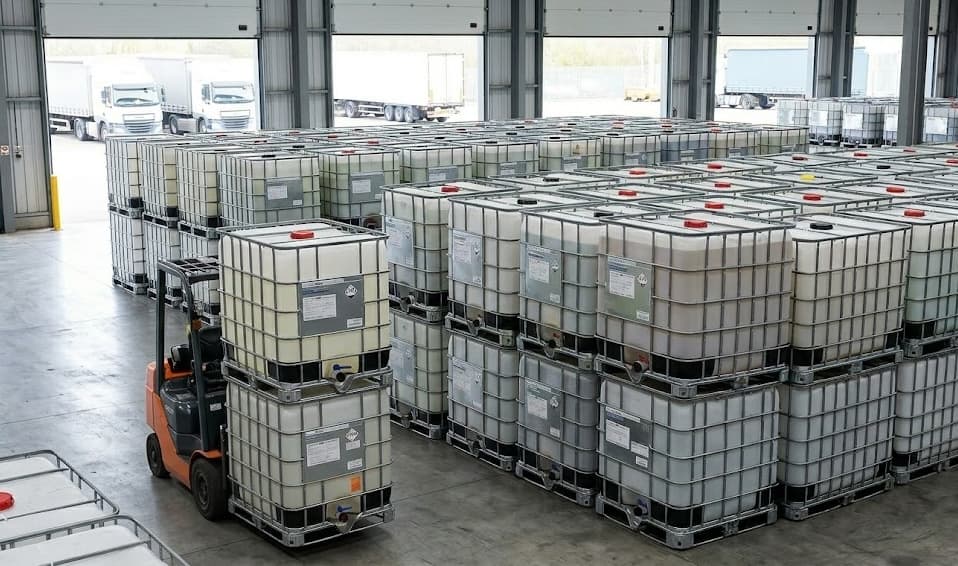
Recycling & Responsible Disposal
When an IBC tote can no longer be reused, it still has enormous material value. Our certified recycling process recovers 98% of every container — HDPE plastic, steel caging, aluminum valves, and wooden pallets are all separated and returned to productive use. Every order includes a Certificate of Recycling for your environmental records and regulatory compliance.
Schedule a Recycling Pickup
Tell us about your containers and we'll coordinate collection and provide a certificate of recycling. Free pickup on 10+ units within our core service area.
Get Your Free Quote
Fill out the form and our team will get back to you within 24 hours with a customized solution.
0 of 8 required fields completed
What to Expect
Submit your request details
Receive a quote within 24 hours
Schedule pickup or delivery
Why Choose Us
Prefer to talk? Call us directly:
(313) 555-1234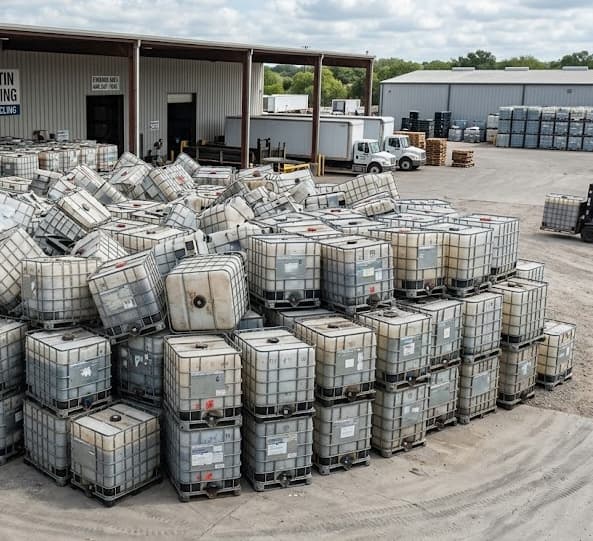
Our Recycling Facility in Action
Thousands of IBC totes pass through our Detroit yard every year, each one carefully processed, dismantled, and returned to productive use.
How We Recycle IBC Totes
Every tote that enters our recycling stream goes through a controlled, documented process designed to maximize material recovery and minimize environmental impact. Our 10-step process ensures nothing is wasted and everything is traceable.
Intake & Logging
Each container is logged into our tracking system with a unique identifier, origin facility, date of receipt, and declared previous contents. This creates the chain-of-custody record that follows the container through the entire recycling process and appears on your Certificate of Recycling.
Photographic Documentation
Every incoming tote is photographed from multiple angles, documenting its condition, markings, and any visible contamination. This visual record supports our chain-of-custody documentation and provides evidence of proper handling for regulatory purposes.
Residue Assessment & Classification
Remaining contents are identified and classified as clean, non-hazardous, or hazardous. We use Safety Data Sheet (SDS) information from the original product, visual inspection, and pH testing to determine the appropriate processing stream. This step determines whether the container enters our standard or hazardous-residue pathway.
Residue Drainage & Management
Any remaining contents are safely drained using appropriate containment methods. Non-hazardous residues are treated on-site through our wastewater management system. Hazardous materials are documented, containerized, and transferred to licensed Treatment, Storage, and Disposal Facilities (TSDFs) with full manifest paperwork.
Container Disassembly
The tote is broken down into its component parts using our specialized disassembly equipment. The HDPE bottle is separated from the steel cage. Valves, gaskets, caps, and fittings are removed. The wooden or plastic pallet base is detached. Each material stream is collected separately for dedicated processing.
HDPE Shredding & Washing
Plastic bottles are fed into our industrial shredder and reduced to flakes approximately 1-2 inches in size. These flakes are then washed in a heated cleaning tank to remove contaminants, labels, adhesive residue, and any remaining chemical traces. Multiple wash cycles ensure thorough decontamination.
HDPE Granulation
Clean HDPE flakes are processed through our granulator, which converts them into uniform pellets ready for manufacturing. These pellets re-enter the plastics supply chain for use in new containers, piping, lumber alternatives, drainage products, and industrial components.
Metal Recovery & Baling
Steel cages are cleaned, sorted by alloy grade when applicable, and compressed into bales for delivery to steel recyclers. Aluminum valves and fittings are collected separately and channeled through specialized aluminum recovery. Brass components are sorted into their own stream.
Wood & Miscellaneous Processing
Wooden pallets in good condition are repaired and returned to the pallet supply chain. Damaged pallets are chipped for use as mulch, animal bedding, or biomass fuel. Plastic pallets are recycled through the HDPE stream. Gaskets and rubber components are processed through appropriate waste channels.
Documentation & Certificate Issuance
You receive a formal Certificate of Recycling confirming the quantities processed, materials recovered, weights diverted from landfill, and compliance with all applicable EPA, EGLE, and state regulations. This documentation supports your environmental reporting, ESG disclosures, ISO 14001 audits, and sustainability goals.
Where Recycled Materials Go
Nothing leaves our facility without a destination. Every material stream from the recycling process feeds back into productive use, creating a genuine closed loop for industrial packaging. Here's exactly where each component ends up.
HDPE Plastic (50-70 lbs per tote)
Granulated into pellets for manufacturing new containers, drainage pipe, plastic lumber, playground equipment, automotive components, and industrial products. HDPE is one of the most recyclable plastics, retaining its structural properties through multiple cycles. Our HDPE pellets are sold to manufacturers in Michigan, Ohio, and Indiana.
Steel Cage (30-40 lbs per tote)
Baled and shipped to regional steel mills for re-smelting. Recycled steel requires 60% less energy than producing steel from iron ore, and the quality is identical to virgin material. Our primary steel recycling partners are located in the Detroit-Toledo industrial corridor.
Aluminum Valves & Fittings (1-3 lbs per tote)
Sorted by alloy type and channeled through specialized aluminum recovery. Aluminum recycling saves 95% of the energy required to produce aluminum from bauxite ore. Even small aluminum components have significant recovery value.
Brass Components (0.5-1 lb per tote)
Brass fittings, threads, and connectors are separated and sold to brass recyclers. Brass has one of the highest scrap values of any common metal and is infinitely recyclable without loss of quality.
Wooden Pallets (30-50 lbs per tote)
Intact pallets are repaired and reused in the pallet supply chain. Damaged pallets are chipped for mulch, animal bedding, or biomass fuel. No wood goes to landfill. Pallet repair and chipping is handled by local Michigan wood recyclers.
Gaskets & Rubber Components
Rubber gaskets and seals are collected and processed through specialized rubber recycling channels. While these represent a small fraction of the total weight, proper handling ensures nothing is sent to landfill unnecessarily.
Environmental Impact Per Tote
Recycling a single IBC tote produces measurable environmental benefits. These are the real numbers behind every container we process, calculated based on the energy, water, and raw materials saved versus manufacturing new products from virgin materials.
Recycling Certificate
Every recycling order includes a formal Certificate of Recycling that documents the number of units processed, the materials recovered by weight, the regulatory standards met, and the environmental metrics achieved. This certificate is accepted by most environmental auditors and can be used in your company's sustainability reporting, ESG disclosures, ISO 14001 audits, and regulatory filings.
For contract customers, we provide quarterly consolidated reports that aggregate all recycling activity into a single comprehensive document, making it easy to integrate into your annual sustainability reports without manual data compilation.
Cumulative Impact Calculator
For larger recycling orders, we provide a customized environmental impact statement. If you're recycling 100 totes, that translates to approximately 12,000 kg of CO2 prevented, 250 barrels of oil saved, 200,000 gallons of water conserved, and 5,000-7,000 pounds of plastic diverted from landfill. These are the kinds of numbers that make a real impact in sustainability reports and ESG disclosures.
Recycling Pricing
Our recycling pricing is transparent and depends on container condition, residue classification, and volume. Clean, non-hazardous containers are often recycled at no charge or may even generate a buyback payment.
Clean / Non-Hazardous
Containers with no residue or only non-hazardous, non-staining previous contents. These totes have significant material value and are often recycled at no charge. In some cases, we pay a buyback credit for clean containers, especially in large quantities.
Includes:
- Free pickup on 10+ units (core zone)
- Full disassembly and material recovery
- Certificate of Recycling included
- Environmental impact statement
- 5-7 business day processing
Standard Residue
Containers with non-hazardous but difficult residues — sticky materials, staining chemicals, agricultural products, or heavy industrial residue that requires extra processing. A modest per-unit fee covers the additional cleaning and treatment required before materials can enter recycling streams.
Includes:
- Residue drainage and treatment
- Full disassembly and material recovery
- Wastewater management included
- Certificate of Recycling included
- 7-10 business day processing
Hazardous Residue
Containers that previously held hazardous materials requiring special handling, documentation, and licensed disposal of residues. Pricing varies based on the specific hazardous material, quantity, and disposal requirements. We provide full manifest documentation and chain-of-custody records.
Includes:
- Hazmat-classified pickup and transport
- Licensed TSDF disposal of residues
- Full waste manifest documentation
- Chain-of-custody records
- Certificate of Disposal and Recycling
- 10-15 business day processing
Volume discounts apply: 10-49 units get 10% off recycling fees. 50-99 units get 18% off. 100+ units receive custom enterprise pricing. Annual recycling contracts lock in the best rates and include quarterly sustainability reports.
Recycling in Action
Automotive Paint Supplier — Dearborn, MI
Challenge
A major automotive paint supplier had accumulated 300+ IBC totes over several years. The containers had held various industrial solvents and paint components, some with hazardous residues. The totes were taking up valuable warehouse space and represented a growing environmental liability.
Solution
We conducted an on-site assessment, classified each container by residue type, and developed a phased recycling plan. 180 clean containers were recycled at no charge. 90 standard-residue containers were processed at $10/unit. 30 hazardous-residue containers were handled through our TSDF partners at $45/unit.
Result
Total cost: $2,250 for the entire 300-unit lot (average $7.50/unit). The facility recovered approximately 4,500 square feet of warehouse space. Environmental impact: 36,000 kg CO2 prevented, 750 barrels of oil saved, 15,000+ pounds of plastic diverted from landfill. Certificate of Recycling provided for their ISO 14001 audit.
Agricultural Cooperative — Saginaw Valley, MI
Challenge
A farming cooperative needed to dispose of 150 IBC totes at the end of the growing season. The containers had held fertilizer and crop protection products and were spread across five farm locations in the Saginaw Valley region. The cooperative needed proper disposal documentation to satisfy EPA container management guidelines.
Solution
We scheduled a single-day pickup route covering all five locations. Our flatbed truck collected the entire lot in one run. All containers were classified as standard-residue (agricultural chemicals, non-hazardous). Processing included residue drainage, treatment, full disassembly, and material recovery.
Result
Total cost: $1,125 ($7.50/unit after 50+ unit volume discount). Processing completed within 10 business days. Certificate of Recycling issued with EPA container management compliance documentation. The cooperative now uses our annual recycling program with scheduled end-of-season pickups.
Certifications & Compliance
Our recycling operations meet or exceed all federal and state environmental regulations. Working with us protects your business from liability while supporting genuine environmental outcomes.
EPA RCRA Compliance
Our facility and processes comply with the Resource Conservation and Recovery Act. We maintain proper waste classifications, storage protocols, and disposal documentation for all materials, including those with hazardous residues. RCRA compliance is critical for protecting generators (you) from downstream liability.
Michigan EGLE Standards
We operate under Michigan Department of Environment, Great Lakes, and Energy (EGLE) regulations. Our facility permits, waste manifests, and processing methods all meet state-specific requirements for industrial recycling operations. We maintain current facility licenses and submit required reporting.
DOT Compliant Transport
All container transportation follows Department of Transportation guidelines for the movement of used industrial containers. Containers with hazardous residues are transported using proper DOT classifications, labeling, and placarding by certified drivers.
Chain of Custody Documentation
From the moment we collect your containers to the final material disposition, every step is documented. You receive full traceability showing exactly what happened to your containers and where the recovered materials went. This documentation is your proof of responsible disposal.
Generator Liability Protection
Under RCRA, the generator of waste (your business) retains liability for proper disposal even after transferring containers to a recycler. Our certified processes, documented chain of custody, and formal certificates create the compliance record you need to demonstrate responsible disposal and protect against future liability claims.
Sustainability Reporting Support
Our documentation is designed to plug directly into corporate sustainability reports, ISO 14001 environmental management systems, ESG disclosure frameworks, and GRI Standards reporting. We provide the raw data, calculated metrics, and formatted certificates your reporting needs.
TSDF Partnership Network
For containers with hazardous residues, we maintain partnerships with multiple licensed Treatment, Storage, and Disposal Facilities (TSDFs) in the Great Lakes region. These partnerships ensure we can handle any hazardous material classification with proper licensing and documentation.
Waste Manifest Management
We prepare and maintain all required waste manifests for hazardous material transport and disposal. Uniform Hazardous Waste Manifests are completed accurately, filed with appropriate state agencies, and copies are provided to you for your records within regulatory timeframes.
Annual Compliance Auditing
Our recycling operations undergo annual internal compliance audits covering all regulatory requirements. We review our processes, documentation, waste handling procedures, and facility conditions against current EPA, EGLE, DOT, and OSHA standards to ensure ongoing compliance.
What We Accept
We accept IBC totes in virtually any condition for recycling. Even badly damaged, stained, or contaminated containers have recoverable material value. Here's what we process:
- End-of-life IBC totes (all sizes and configurations)
- Structurally damaged containers not suitable for reuse
- Totes with persistent staining or odor
- Containers that held non-hazardous chemicals
- Containers with hazardous residues (with prior notification)
- Cracked or UV-degraded HDPE bottles
- Bent, rusted, or broken steel cages
- Individual components (bottles, cages, pallets, valves)
- Stainless steel IBC containers
- All-plastic IBC containers without steel cages
- Containers with expired certifications
- Bulk lots from facility closures and decommissions
- Fire-damaged or flood-damaged containers
- Containers with unknown previous contents (with assessment)
Hazardous Residue Management
Containers that previously held hazardous materials require special handling. We have the expertise, equipment, and licensed partnerships to manage these containers responsibly while protecting your regulatory standing.
Prior Notification Required
Let us know in advance about containers with hazardous residues. Provide SDS sheets or product names when available. We'll provide specific handling instructions and schedule dedicated processing to prevent cross-contamination with non-hazardous materials.
Licensed Disposal Partners
Hazardous residues are transferred to licensed Treatment, Storage, and Disposal Facilities (TSDFs) with full manifest documentation. We maintain partnerships with several licensed facilities in Michigan, Ohio, and Indiana to ensure we can handle any classification.
Complete Documentation
You receive Uniform Hazardous Waste Manifests, certificates of disposal, chain-of-custody records, and our Certificate of Recycling for every container with hazardous residues. This documentation package provides robust liability protection for your organization.
Regulatory Guidance
Not sure if your containers qualify as hazardous waste? We can help you navigate the classification process. Many containers that generators assume are hazardous actually qualify as non-hazardous under RCRA empty container rules, potentially saving you significant processing costs.
Emergency Spill Response Coordination
In the rare event of a spill during pickup or transport, our team is trained in spill containment and response procedures. We carry spill kits on all hazmat-designated runs and coordinate with local emergency response teams when required.
Industry-Specific Recycling Programs
Different industries generate different types of IBC waste, each with unique residue profiles, regulatory requirements, and volume patterns. We've developed specialized recycling programs for each sector.
Automotive Manufacturing
High-volume recycling programs for totes that held coolants, lubricants, paint components, adhesives, and cleaning solvents. Scheduled pickups synchronized with production schedules. Most automotive chemicals are non-hazardous, resulting in low or no processing fees. We work with OEM plants and Tier 1-3 suppliers throughout Southeast Michigan.
Chemical Distribution
Specialized handling for the diverse range of chemicals that distributors handle. We classify each container individually and route it to the appropriate processing stream. Hazardous residue management with full manifest documentation. Ideal for distributors clearing out discontinued product lines or managing ongoing container returns.
Agriculture & Crop Protection
Seasonal recycling programs aligned with planting and harvest cycles. EPA container management guideline compliance for containers that held crop protection products. We schedule end-of-season collection routes covering rural locations throughout Michigan, Ohio, and Indiana.
Food & Beverage Processing
Food-grade container recycling with documentation suitable for food safety audits. Most food containers are clean or low-residue, resulting in free recycling or buyback credits. High-volume programs for processors who cycle through containers regularly.
Recycling FAQ
Is recycling IBC totes really free?
For clean, non-hazardous containers — often yes. These totes have significant material value (HDPE plastic, steel, aluminum) that offsets processing costs. In some cases, we even pay a buyback credit for clean containers. Containers with residues or hazardous materials incur processing fees to cover the additional treatment required.
How long does the recycling process take?
Standard processing takes 5-7 business days from receipt. Standard-residue containers take 7-10 business days. Hazardous-residue containers take 10-15 business days due to additional documentation and TSDF coordination. Your Certificate of Recycling is issued within 3 business days of processing completion.
Can I recycle just a few totes, or do I need a large quantity?
We accept any quantity — even a single container. However, pickup fees may apply for small quantities (under 10 units). For 10+ units within our core service area, pickup is free. You can also deliver any quantity to our Detroit facility during business hours at no charge.
What if I don't know what was previously stored in the container?
We can still accept the container, but we'll need to perform our own assessment before processing. We use visual inspection, pH testing, and odor analysis to classify unknown residues. If the residue appears potentially hazardous, we may need to conduct laboratory analysis, which could add processing time and cost.
Do you recycle containers from outside Michigan?
Yes. We recycle containers from across the Great Lakes region, including Ohio, Indiana, Illinois, Wisconsin, and Southern Ontario. Transport logistics and pricing vary by location. For areas outside our direct fleet coverage, we coordinate with carrier partners for cost-effective pickup.
What happens to the Certificate of Recycling?
The Certificate of Recycling is a formal document that you should retain in your environmental records. It serves as proof of responsible disposal and can be used for regulatory compliance documentation, insurance records, ISO 14001 audits, ESG disclosures, and corporate sustainability reports. We issue digital certificates via email and can provide hard copies upon request.
Can recycling help our company meet sustainability goals?
Absolutely. Every container recycled generates quantifiable environmental metrics — CO2 prevented, water conserved, materials diverted from landfill, and energy saved. We provide these metrics in every Certificate of Recycling. For contract customers, quarterly reports aggregate all activity into ESG-ready data.
What if a tote could potentially be reused instead of recycled?
We always assess whether a container can be reused before routing it to recycling. Reuse has a higher environmental benefit than recycling because it eliminates the energy required for material processing. If we determine your containers are suitable for cleaning and resale, we'll offer that option — which may result in a higher buyback value for you.
Related Services
Recycling is one part of a complete container lifecycle. Many customers combine recycling with our other services for a seamless, end-to-end solution.
Buy & Sell IBC Totes
Before recycling, consider whether your containers might have resale value. Many totes we assess for recycling are actually suitable for cleaning and resale — potentially earning you more than recycling alone.
Learn MoreCleaning & Refurbishing
Containers that are too dirty for reuse but still structurally sound may benefit from professional cleaning rather than recycling. Our cleaning service can restore containers that seem like recycling candidates.
Learn MoreTransportation & Logistics
Need containers picked up for recycling? Our fleet handles the logistics across the entire Great Lakes region. Free pickup on qualifying recycling orders of 10+ units.
Learn MoreRecycle Your IBC Totes Responsibly
Don't let end-of-life containers become an environmental liability. Contact us to schedule a recycling pickup and receive your Certificate of Recycling. Free pickup on 10+ units. We respond to every inquiry within 24 hours.