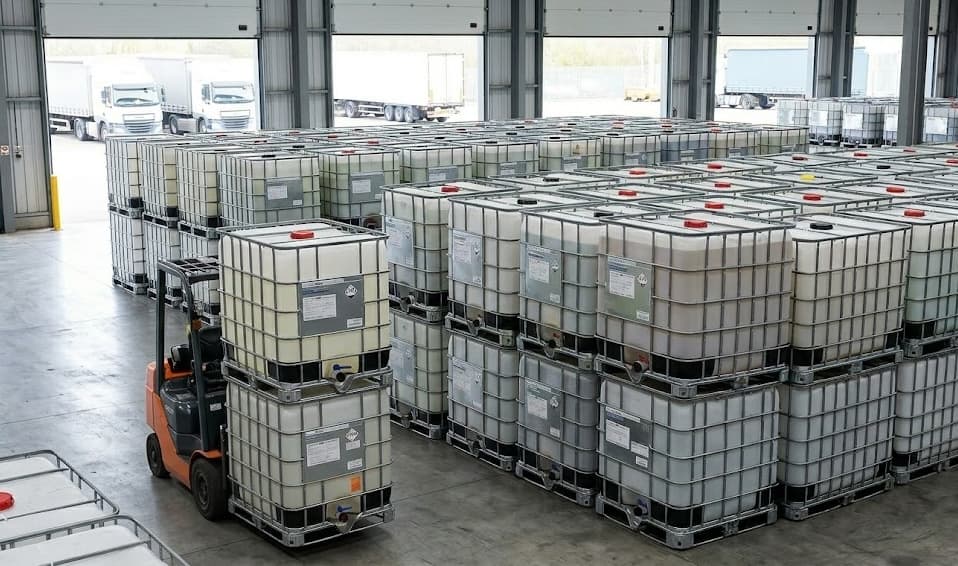
Sustainability Mission
Every IBC tote we reclaim keeps 50-70 lbs of plastic out of a landfill and saves the equivalent of 2.5 barrels of crude oil. Here's how we're building a zero-waste future for industrial packaging.
Partner With Us on Sustainability
Tell us about your sustainability goals and we'll show you how recycled IBC totes can make a measurable difference.
Get Your Free Quote
Fill out the form and our team will get back to you within 24 hours with a customized solution.
0 of 8 required fields completed
What to Expect
Submit your request details
Receive a quote within 24 hours
Schedule pickup or delivery
Why Choose Us
Prefer to talk? Call us directly:
(313) 555-1234Environmental Impact by the Numbers
These aren't projections or goals — these are real numbers from our operations since 2019. Every figure is based on verified intake, processing, and diversion data.
Landfill Diversion Rate
Of every IBC tote we process, 98% of the material by weight is either reused directly or sent to certified material recyclers. Only non-recoverable residue — such as heavily degraded rubber gaskets or contaminated valve seals — goes to waste. We are working to bring that figure to 99% by the end of 2025 through new partnerships with specialty recyclers.
Water Reduction vs. New Manufacturing
Cleaning and refurbishing an existing tote requires a fraction of the water that manufacturing a new one from raw petrochemical feedstock demands. Our closed-loop wash system further amplifies this advantage by reclaiming and filtering 90% of the water used in each wash cycle, reducing freshwater consumption to approximately 15 gallons per tote.
CO₂ Equivalent Saved Per Tote
Each recycled IBC tote prevents roughly the same amount of carbon emissions as taking a car off the road for 300 miles. At our current processing volume of approximately 3,000 totes per year, that equates to removing the carbon impact of 900,000 miles of driving annually — the equivalent of 36 cars driving 25,000 miles each.
CO₂ Avoided Per Tote vs. New
Manufacturing a single new IBC tote from virgin HDPE generates over 120 kilograms of CO₂ when you account for petrochemical extraction, polymer processing, mold fabrication, steel cage welding, and transportation. By reusing existing totes, we eliminate virtually all of that production-phase carbon. The only emissions associated with our recycled totes come from collection, cleaning, and delivery.
Want to calculate the environmental impact of switching to recycled totes for your specific operation? Try our Eco Impact Calculator
The Circular Economy for IBC Totes
The traditional linear model — manufacture, use once, discard — is wasteful, expensive, and environmentally destructive. We operate on a circular model where every container is kept in productive use for as long as physically possible.
Collect Used Totes
We pick up used IBC totes from manufacturers, chemical plants, food processors, and distributors across the Great Lakes region. Instead of paying for disposal, businesses get paid through our buyback program.
Clean, Inspect & Grade
Each tote is cleaned using our multi-stage process, inspected against our six-point quality standard, and assigned a grade (A, B, or C). Full documentation is created for every container.
Sell & Deliver
Graded totes are matched with buyers who need containers at 40-60% below the cost of new. We deliver directly to facilities across our five-state service area, typically within 2-3 business days.
Repeat or Recycle Materials
When totes reach the end of their usable life, we disassemble them for component recycling — HDPE to plastic recyclers, steel to scrap metal processors, wood pallets to biomass. Nothing goes to landfill.
How Many Times Can a Tote Be Reused?
A well-maintained IBC tote can serve 5-7 complete use cycles before the HDPE bottle needs to be replaced or the container needs to be fully decommissioned. Each use cycle typically lasts 1-3 years depending on the contents stored and the handling conditions.
That means a single IBC tote manufactured today could remain in productive service for 10-20 years through proper recycling and refurbishment. Compare that to the current reality where 80-85% of used totes are discarded after just one use cycle — it's an enormous amount of wasted functional life.
Even when a tote reaches the end of its structural life, the materials retain value. The HDPE can be pelletized and remolded into new products. The galvanized steel can be melted and reformed. The circular economy isn't just about reuse — it's about ensuring that every material remains in productive circulation for as long as possible.
The Environmental Cost of “New”
Manufacturing a single new 275-gallon IBC tote requires approximately 2.5 barrels of crude oil (for the HDPE polymer), 2,000+ gallons of process water, significant energy for extrusion and molding, and generates over 120 kg of CO₂ in production emissions alone.
Then there's the steel cage — fabricated from galvanized steel that requires mining, smelting, and welding. And the pallet — typically hardwood or HDPE, each with its own extraction and manufacturing footprint.
When you add transportation from manufacturing facilities (often overseas) to domestic distribution, a new IBC tote carries a substantial environmental burden before it's ever filled with product. Reusing an existing tote eliminates virtually all of this upstream impact, making it one of the most effective single actions a business can take to reduce its packaging-related carbon footprint.
The IBC Tote Waste Crisis
Intermediate Bulk Containers are the workhorses of industrial shipping. They move chemicals, food ingredients, cleaning agents, agricultural products, and countless other liquids across the supply chain. But when their first use-cycle ends, the vast majority are treated as disposable waste.
Nationally, an estimated 1.5 million IBC totes are discarded every year. In Michigan alone, tens of thousands end up in landfills annually. Each one represents 50-70 pounds of high-density polyethylene (HDPE) plastic, a galvanized steel cage, and a wooden or plastic pallet — all of which can be recovered, cleaned, and put back into service.
The tragedy is that a well-maintained IBC tote can serve 5-7 use cycles before the materials need to be broken down and reprocessed. That means 80-85% of the totes entering landfills still have functional life remaining. We exist to close that gap.
The problem isn't that businesses want to throw away usable containers. It's that, until recently, there was no convenient, reliable, and economically attractive alternative. Waste haulers made it easy to schedule a dumpster and a truck. Finding a recycler who would actually collect, clean, and resell the totes? That was a different story entirely — especially in the Midwest, where IBC recycling infrastructure was virtually nonexistent before we started.
IBC Recycling Detroit was founded specifically to fill that gap. We make it as easy to recycle an IBC tote as it is to throw one away — and we pay businesses for the privilege instead of charging them. When the sustainable option is also the cheapest and most convenient option, adoption takes care of itself.
450+ Years
Time it takes HDPE plastic from a single IBC tote to decompose in a landfill. The totes discarded today will still be intact in the year 2475. During that time, they can leach microplastics into soil and groundwater.
1.5 Million
Estimated number of IBC totes discarded in the United States annually, the vast majority of which are still functionally usable. That represents approximately 75-105 million pounds of plastic waste per year from IBC totes alone.
120+ kg CO₂ Per New Tote
Manufacturing a single new IBC tote from virgin materials generates over 120 kilograms of carbon dioxide. Reusing an existing tote eliminates virtually all of that production-phase carbon footprint.
2.5 Barrels of Crude Oil
Each new IBC tote requires approximately 2.5 barrels of crude oil to produce the HDPE polymer for the bottle. At 1.5 million totes discarded annually, that's 3.75 million barrels of oil embedded in containers headed to landfills every year.
2,000+ Gallons of Water
Manufacturing a new IBC tote from virgin materials consumes over 2,000 gallons of process water. Our refurbishment process uses approximately 15 gallons per tote thanks to our closed-loop wash system — a 99% reduction.
The Solution
A robust circular economy for IBC totes — where every container is inspected, cleaned, recertified, and returned to productive use for as long as physically possible. When that life finally ends, every component is separated and sent to the appropriate material recycler. Zero waste. Zero excuses.
Recycled vs. New: Environmental Comparison
A detailed comparison of the environmental cost of purchasing a new IBC tote versus using a refurbished one from IBC Recycling Detroit.
| Environmental Metric | New IBC Tote | Recycled IBC Tote | Savings |
|---|---|---|---|
| CO₂ Emissions | 120+ kg | ~8 kg | 93% reduction |
| Water Consumption | 2,000+ gallons | ~15 gallons | 99% reduction |
| Crude Oil Required | 2.5 barrels | 0 barrels | 100% elimination |
| Energy Consumption | ~1,200 kWh | ~45 kWh | 96% reduction |
| Landfill Impact | 450+ year decomposition | 0 landfill contribution | 100% diversion |
| Microplastic Risk | Production waste + eventual disposal | Extended use delays degradation | Significant reduction |
| Steel Mining Impact | New ore extraction | Existing cage reused | 100% for reusable cages |
| Transportation Footprint | Often shipped internationally | Local collection & delivery | 60-80% reduction |
Methodology note:Figures for new IBC tote production are based on published lifecycle analysis data for 275-gallon HDPE intermediate bulk containers manufactured in North America and Asia. Recycled tote figures are based on IBC Recycling Detroit's internal operational data, including measured water consumption, energy usage, and transportation fuel records. CO₂ calculations use EPA emission factors for transportation and the U.S. average grid emission factor for electricity.
Our Sustainability Practices
Sustainability isn't just what we sell — it's how we operate. Every aspect of our facility, processes, and logistics is designed to minimize environmental impact.
Closed-Loop Wash System
Our cleaning facility uses a water reclamation system that filters, treats, and recirculates wash water. We capture 90% of the water used in each wash cycle, dramatically reducing our freshwater consumption compared to single-pass systems. The reclamation system includes sediment filtration, chemical neutralization, and UV sterilization stages.
Component-Level Recovery
When a tote can't be reused whole, we don't discard it. The HDPE bottle is sent to certified plastic recyclers. The steel cage is sold to metal scrap processors. The pallet is repaired or chipped for biomass. Every component has a destination that isn't a landfill. In 2025, we processed over 800 end-of-life totes through our component recovery stream.
Route-Optimized Logistics
Our pickup and delivery routes are planned to minimize empty miles and fuel consumption. We batch collections by geographic zone and combine pickups with deliveries whenever possible, reducing per-tote transportation emissions by an estimated 35%. Our route planning software recalculates daily based on new orders and cancellations.
Chemical-Safe Cleaning
We use biodegradable, non-toxic cleaning agents for our standard wash process. For totes that held hazardous materials, we follow EPA and DOT-compliant decontamination protocols, ensuring all residues are properly neutralized and disposed of through licensed hazardous waste facilities. All cleaning chemicals are sourced from environmentally certified suppliers.
Energy-Conscious Facility
Our warehouse utilizes LED lighting throughout, motion-activated climate controls in office areas, and energy-efficient pressure washing equipment. We're currently evaluating rooftop solar installation for our main facility to further reduce our grid dependence. In 2025, we reduced facility electricity consumption by 12% year-over-year through equipment upgrades and behavioral changes.
Digital Documentation
We've eliminated paper-based tracking entirely. Every tote is logged digitally from intake to delivery, reducing paper waste and creating a more accurate, searchable record of our environmental impact over time. Customers access their documentation through a digital portal, eliminating the need for printed reports and shipping manifests.
Waste Segregation & Recycling
Within our facility, all waste streams are segregated for appropriate handling. Cardboard, office paper, aluminum cans, and plastic bottles are recycled through municipal programs. Hazardous residues from decontamination are handled by licensed disposal facilities. Even our breakroom operates on a zero-single-use-plastic policy.
Supplier Environmental Standards
We hold our own suppliers to environmental standards. Cleaning agents must be biodegradable. Replacement parts must come from manufacturers with documented environmental policies. Transportation partners must maintain modern, emission-compliant fleets. We review supplier environmental credentials annually and prioritize vendors who share our values.
Fleet Efficiency & Electrification Planning
Our current fleet runs on modern, fuel-efficient diesel engines that meet all current emission standards. We're actively planning the transition to electric vehicles for our local delivery routes (under 100 miles), with the first EV cargo van expected to enter service in late 2026. For longer hauls, we're evaluating compressed natural gas (CNG) options.
2025 Annual Sustainability Snapshot
How Sustainability Benefits Your Business
Choosing recycled IBC totes isn't just good for the planet — it delivers tangible business value across procurement, compliance, marketing, and risk management.
Lower Procurement Costs
Recycled totes cost 40-60% less than new equivalents. For a company purchasing 100 totes annually, that's $10,000-$20,000 in direct savings. Those savings compound over time as you integrate recycled totes into your standard procurement cycle. Our buyback program means you also generate revenue from containers you no longer need.
ESG & Sustainability Reporting
We provide detailed environmental impact documentation for every order — pounds of plastic diverted, CO₂ avoided, water saved, and more. This data plugs directly into your ESG reports, sustainability disclosures, and corporate responsibility communications. Several of our customers have used our data to achieve environmental certifications and meet investor-driven sustainability targets.
Regulatory Compliance Support
Our documentation includes chain-of-custody records, cleaning verification, and residue testing results. For industries subject to EPA, DOT, FDA, or OSHA regulations, this paperwork simplifies compliance audits and demonstrates due diligence in container selection and handling.
Brand & Customer Perception
Consumers and B2B buyers increasingly favor companies that demonstrate genuine environmental commitment. Using recycled IBC totes is a visible, verifiable sustainability practice you can highlight in marketing materials, website content, and customer communications. We're happy to be referenced as your sustainability partner.
Supply Chain Resilience
The 2020-2022 supply chain crisis proved that relying exclusively on new-manufactured containers creates vulnerability. Recycled totes from a local supplier provide a reliable alternative that isn't subject to international shipping disruptions, polymer price volatility, or overseas manufacturing delays.
Waste Management Simplification
Our buyback program eliminates the hassle of disposing of used totes. Instead of coordinating with waste haulers, renting dumpsters, and paying tipping fees, you call us — we pick up, we pay you, and the containers stay in the circular economy. It's a waste management solution that pays for itself.
Our Zero-Waste Roadmap
We're not content with 98% diversion. Here's where we're headed — a multi-year plan to achieve truly zero-waste operations and lead the industry in environmental responsibility.
99% Landfill Diversion
Achieve 99% diversion by establishing new partnerships with specialty recyclers for the remaining hard-to-process components like degraded rubber gaskets and heavily contaminated valve assemblies. We've identified two potential partners and are currently in pilot testing with both.
ISO 14001 Certification
Complete the ISO 14001 Environmental Management System certification process, formalizing our commitment to continuous environmental improvement through internationally recognized standards. Gap analysis is complete and we are in the implementation phase.
Carbon-Neutral Operations
Offset remaining transportation and facility emissions through a combination of fleet electrification (starting with local delivery routes), rooftop solar installation, and verified carbon offset purchases for unavoidable emissions. Solar panel installation is scheduled for Q2 2026; first EV cargo van delivery is expected in Q4 2026.
Zero Waste Business Certification
Pursue Zero Waste Business certification from the Zero Waste International Alliance, which requires diverting at least 90% of all discarded resources from landfills, incinerators, and the environment. At our current 98%+ rate, we expect to qualify well above the threshold.
Full Supply Chain Transparency Dashboard
Launch a public-facing dashboard that tracks every tote through our system in real time — from initial pickup to final delivery — with associated environmental impact metrics visible to customers and the public. This will be the first tool of its kind in the IBC recycling industry.
Water-Positive Operations
Achieve net-positive water impact by investing in community water infrastructure projects and expanding our closed-loop system to achieve 95% reclamation (up from 90%). We're researching partnerships with Detroit-area water conservation nonprofits to fund filtration and access projects.
Regional Zero-Waste Network
Establish a network of partner facilities across the Great Lakes region to create a truly circular IBC tote economy, minimizing transportation distances and maximizing material recovery across Michigan, Ohio, Indiana, and Wisconsin. We're already in discussions with potential partners in Grand Rapids, Toledo, and Milwaukee.
Industry Standard-Setting
Work with industry associations, EPA, and state regulators to establish formal best-practice standards for IBC tote recycling, cleaning, and recertification — standards based on the processes we've developed and refined since 2019. Our goal is to make professional-grade recycling the default, not the exception.
Sustainability FAQ
How do you calculate your environmental impact numbers?
We track every tote from intake to delivery using our digital tracking system. Environmental metrics are calculated using established conversion factors: CO₂ savings based on published lifecycle analysis data for HDPE manufacturing vs. refurbishment; water savings based on measured consumption in our facility vs. published new-production water requirements; oil equivalents based on standard HDPE-to-petroleum conversion ratios. We cross-reference our internal data with EPA emission factors and industry benchmarks annually.
What cleaning chemicals do you use and are they safe?
Our standard cleaning process uses biodegradable, non-toxic agents from certified environmentally responsible suppliers. Specific formulations vary based on the previous contents of the tote. For food-grade containers, we use food-safe sanitizing agents. For containers that held hazardous materials, we use specialized decontamination protocols under EPA and DOT guidelines, with all residual chemicals disposed of through licensed hazardous waste facilities.
Can you provide environmental impact reports for my company’s ESG reporting?
Yes. We provide detailed environmental impact documentation for every order, including pounds of plastic diverted from landfill, CO₂ emissions avoided, water saved vs. new manufacturing, and barrels of oil conserved. This data is formatted to integrate with standard ESG reporting frameworks. Several of our customers include our data directly in their annual sustainability reports and corporate responsibility disclosures.
What happens to the water used in your cleaning process?
Our closed-loop wash system captures and recirculates approximately 90% of all water used. The reclamation process includes sediment filtration, chemical neutralization, and UV sterilization. The remaining 10% that can’t be reclaimed is processed through our facility’s wastewater treatment system before discharge, meeting all local and federal standards. We consume approximately 15 gallons of freshwater per tote cleaned.
Do recycled totes have a larger carbon footprint from transportation?
No. In fact, the opposite is true. New IBC totes are often manufactured overseas (primarily in China and Eastern Europe) and shipped internationally before domestic distribution. Our recycled totes are collected, processed, and delivered locally within the Great Lakes region. The transportation carbon footprint of a recycled tote from IBC Recycling Detroit is typically 60-80% lower than that of a new tote reaching the same customer.
Are you greenwashing? How can I verify your claims?
We understand the skepticism — too many companies make unsubstantiated environmental claims. Here’s how we back ours up: all environmental figures are based on measured operational data, not estimates. We’re pursuing ISO 14001 certification to provide third-party verification. We welcome facility tours where you can see our processes firsthand. And our goal of launching a public real-time impact dashboard by 2027 will make our numbers visible to everyone, not just customers.
Standards We Meet & Pursue
EPA Compliance
ActiveFull compliance with EPA regulations for handling, cleaning, and transporting containers that previously held regulated substances. Verified through annual internal audits and documentation reviews.
DOT Hazardous Materials
ActiveDepartment of Transportation compliance for all totes re-entering the supply chain, including proper labeling, documentation, and transport protocols. All drivers hold current DOT hazmat awareness certifications.
OSHA Workplace Safety
ActiveFull compliance with Occupational Safety and Health Administration standards for our warehouse and processing operations. Regular safety audits, documented training programs, and zero-incident target. We recorded zero lost-time incidents in 2025.
FDA Food Safety Modernization Act (FSMA)
ActiveOur Grade A tote cleaning and handling procedures comply with FSMA requirements for containers used in food-contact applications. Documentation package includes sanitization verification and previous-contents history.
ISO 14001 (Environmental Management)
In ProgressWorking toward ISO 14001 certification to formalize our environmental management system and demonstrate our commitment to continuous improvement in sustainability. Gap analysis complete; currently in implementation phase with target completion in Q4 2025.
Michigan Green Business Certification
AppliedApplication submitted for the state of Michigan's Green Business certification program, recognizing businesses that demonstrate measurable environmental stewardship through waste reduction, energy efficiency, and community engagement.
Zero Waste International Alliance
Target 2026Pursuing Zero Waste Business certification, which requires diverting at least 90% of all discarded resources from landfills, incinerators, and the environment. Our current 98%+ rate exceeds the threshold; certification process requires documented systems review.
B Corp Certification
EvaluatingExploring B Corporation certification, which evaluates a company's entire social and environmental impact. The rigorous assessment covers governance, workers, community, environment, and customers. We expect to begin the formal application process in 2027.
Local Environmental Partnerships
Detroit River Coalition
We partner with the Detroit River Coalition on quarterly river cleanup events and contribute recovered materials data to their watershed pollution tracking research. Our team has participated in 16 cleanup events since 2021, removing an estimated 2,400 pounds of debris from the Detroit River watershed.
Michigan Recycling Coalition
As an active member of the Michigan Recycling Coalition, we contribute to statewide policy discussions about industrial packaging waste, extended producer responsibility, and recycling infrastructure investment. We serve on their Industrial Materials Working Group and present at the annual Michigan Recycling Conference.
Wayne County Environmental Education
We host facility tours for local high school and community college students, demonstrating real-world applications of environmental science, logistics, and sustainable business practices. Over 300 students have toured our facility since 2022. We also sponsor two annual environmental science scholarships at Wayne County Community College.
Southwest Detroit Environmental Vision (SDEV)
Supporting SDEV's mission to improve air quality and reduce industrial waste in Southwest Detroit. We provide data on our diversion rates and participate in community advisory board meetings. In 2024, we co-sponsored their annual Environmental Health Fair and provided educational materials on industrial recycling.
Great Lakes Plastics Cleanup Initiative
Contributing to regional efforts to reduce plastic pollution in the Great Lakes watershed. Every tote we reclaim is one less potential source of microplastic contamination entering Michigan's waterways. We provide quarterly reports on our HDPE diversion volumes to the initiative's research team.
University of Michigan School of Environment & Sustainability
We serve as a field study site for graduate students researching circular economy models in industrial packaging. Two master's theses have been written using data from our operations. We also guest lecture annually in their Sustainable Business course on the economics of industrial recycling.
Detroit Future City
Collaborating with Detroit Future City's Green Infrastructure team on strategies for incorporating industrial recycling into the city's broader sustainability vision. We participate in their Green Business Network and contribute case study data for their economic impact assessments.
Habitat for Humanity Southeast Michigan
We donate clean, structurally sound IBC totes to Habitat for Humanity build sites for rainwater collection and temporary water storage. Since 2023, we've donated over 50 totes to local Habitat projects, supporting sustainable building practices in underserved communities.
What Our Partners Say About Our Impact
“The environmental impact data that IBC Recycling Detroit provides has been transformative for our ESG reporting. We can now quantify exactly how many tons of plastic we've diverted, how much CO₂ we've avoided, and present that to our board and investors with full confidence in the numbers.”
“As an environmental educator, I bring my students to IBC Recycling Detroit's facility every semester. It's one of the best real-world examples of circular economy principles I can show them. The team is incredibly patient with questions and genuinely passionate about what they do.”
“We needed a container supplier who could back up their green claims with actual data — not marketing brochures. IBC Recycling Detroit delivers documented environmental metrics with every order. That level of transparency is exactly what the industry needs more of.”
“Working with IBC Recycling Detroit has helped us reduce our packaging waste stream by over 60%. Their buyback program means our used totes become someone else's affordable supply instead of landfill volume. It's a win-win-win model.”
“I've recommended IBC Recycling Detroit to six of my sustainability consulting clients. Every single one has come back satisfied — not just with the totes, but with the quality of environmental documentation and the genuine commitment to doing things right.”
“Our partnership with IBC Recycling Detroit on river cleanups has been incredibly productive. Their team shows up with energy and expertise, and their data contributions to our watershed research have been invaluable. This is what real corporate environmental responsibility looks like.”
Make Your Business Part of the Solution
Every IBC tote you recycle with us is a measurable step toward reducing your company's environmental footprint. Let's build a cleaner supply chain together — one tote at a time.