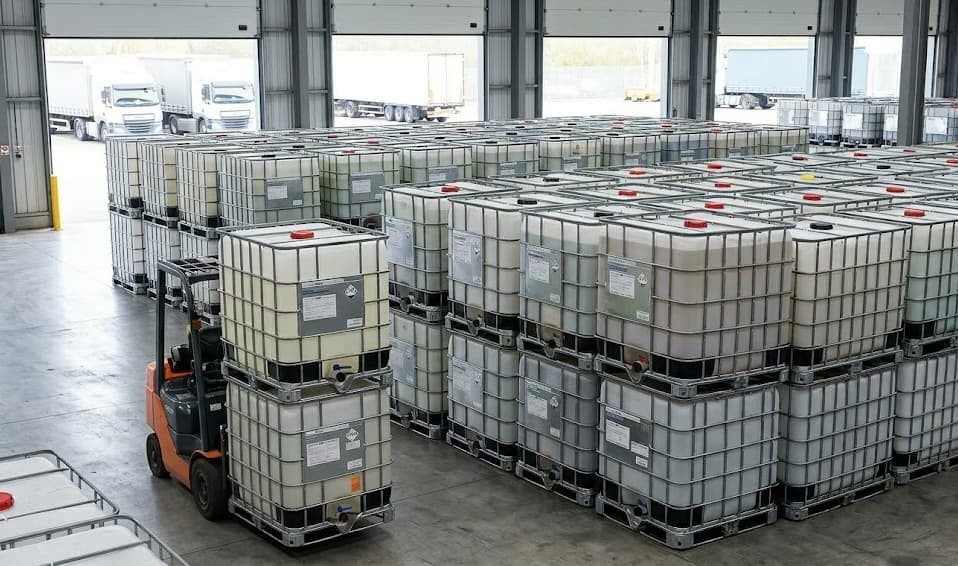
Michigan's Department of Environment, Great Lakes, and Energy (EGLE) takes industrial container disposal seriously. With the Great Lakes ecosystem at stake and a long history of industrial pollution cleanup, the state has developed some of the most comprehensive container management regulations in the Midwest. Here's what Michigan businesses need to know about complying with container disposal rules.
The Regulatory Framework
Industrial container disposal in Michigan falls under several overlapping regulatory frameworks. Part 111 of Michigan's Natural Resources and Environmental Protection Act (NREPA) covers hazardous waste management. Part 121 covers liquid industrial wastes. Part 115 covers solid waste management. Federal RCRA (Resource Conservation and Recovery Act) requirements as delegated to Michigan by the EPA also apply.
For IBC totes specifically, the applicable regulations depend on what was previously stored in the container. A tote that held non-hazardous materials (food products, water, agricultural nutrients) has different disposal requirements than one that held hazardous materials.
Non-Hazardous IBC Disposal
For IBC totes that contained only non-hazardous materials, Michigan Part 115 solid waste regulations apply. These containers can be disposed of at licensed solid waste facilities (landfills), but doing so is expensive (typically $15-$50 per tote in tipping fees plus hauling) and environmentally irresponsible.
Recycling is the preferred regulatory path. Michigan's Solid Waste Policy encourages recycling over disposal for materials with viable recycling markets — and HDPE plastic from IBC totes has a well-established recycling market. By selling or donating your used non-hazardous IBCs for recycling or reuse, you avoid disposal costs, comply with Michigan's waste hierarchy preferences, and may qualify for recycling tax credits.
Hazardous Material IBC Disposal (RCRA Empty)
Here's where it gets complex. An IBC tote that contained hazardous materials is itself considered hazardous waste UNLESS it meets the "RCRA empty" definition under 40 CFR 261.7. To qualify as RCRA empty, all materials must be removed using practices commonly employed (pouring, pumping, aspirating), and no more than 2.5 centimeters (1 inch) of residue remains on the bottom, or no more than 3% by weight of the total capacity remains for containers 119 gallons or less, or no more than 0.3% by weight for containers greater than 119 gallons.
For a 275-gallon IBC, 0.3% by weight means less than approximately 6.9 pounds of residue can remain for the container to qualify as RCRA empty. If your tote held a product with specific gravity of 1.0 (water weight), that translates to less than about 0.8 gallons of residual material.
If the container doesn't meet the RCRA empty definition, it must be managed as hazardous waste — which means manifesting, licensed transporter, treatment/storage/disposal facility, and all associated recordkeeping. The costs escalate dramatically.
Triple Rinsing for Acute Hazardous Waste
If your IBC contained an acute hazardous waste (P-listed waste under RCRA), the standard RCRA empty definition doesn't apply. Instead, the container must be triple-rinsed with an appropriate solvent, and the rinse water must be managed as hazardous waste. Only after documented triple rinsing does the container itself escape hazardous waste classification.
Storage Regulations While Awaiting Disposal
Even while you're figuring out what to do with used IBCs, storage regulations apply. Satellite accumulation rules allow up to 55 gallons of hazardous waste (or one container up to 55 gallons of acute hazardous waste) at the point of generation without a storage permit. Beyond that, you need a 90-day (large quantity generator) or 180-day (small quantity generator) storage permit.
For non-hazardous used IBCs, there are no specific time limits on storage, but accumulated containers must be maintained in a manner that doesn't create a nuisance, fire hazard, or vector attraction (pest harbor). Local fire codes may also limit the number of IBCs stored in a given area due to the flammable nature of HDPE.
Penalties for Non-Compliance
EGLE enforcement actions for improper container disposal can be severe. Administrative fines range from $1,000 to $25,000 per day of violation for solid waste infractions, and up to $50,000 per day for hazardous waste violations. Criminal penalties (for knowing violations) can include fines up to $50,000 per day and imprisonment up to 2 years for first offenses.
Beyond regulatory penalties, companies can face cleanup liability under Michigan's Part 201 environmental contamination statute if improperly disposed containers cause soil or groundwater contamination. These cleanup costs routinely reach hundreds of thousands or millions of dollars.
The Smart Compliance Path
The most cost-effective and compliant approach to used IBC management is straightforward: establish a relationship with a licensed recycler (like IBC Recycling Detroit) who can provide documented pickup, proper handling, and recycling or reuse of your spent containers.
This approach eliminates disposal costs and replaces them with revenue, provides documented compliance for regulatory audits, reduces your waste generation metrics for EGLE reporting, supports Michigan's circular economy goals, and eliminates storage accumulation concerns through regular pickup schedules.
Next Steps
If you're generating used IBC totes and aren't sure about your compliance obligations, contact us for a free assessment. We'll review your container types, previous contents, and volumes, then recommend a compliant management program. For most businesses, we can convert IBC disposal from a cost into a revenue source while ensuring full regulatory compliance.