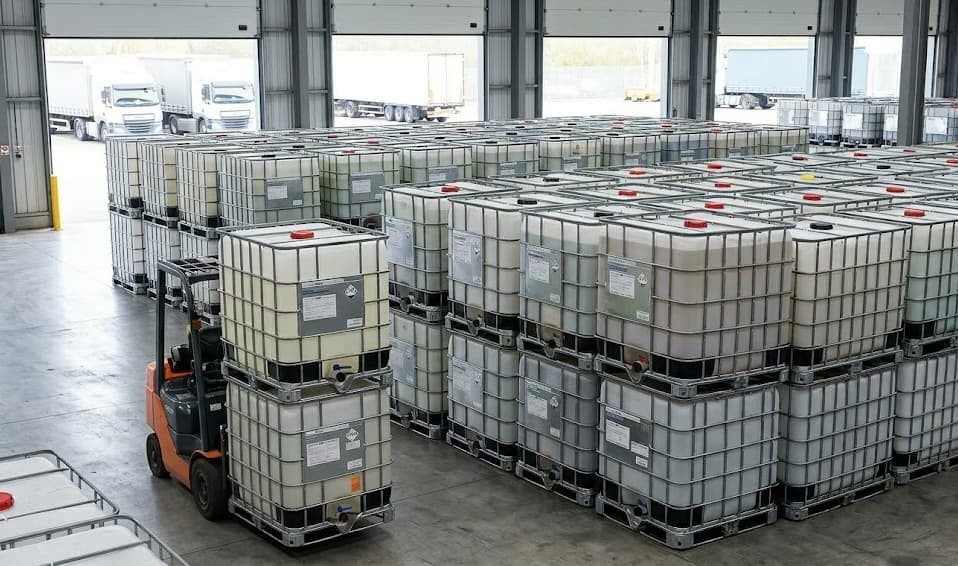
Michigan winters are harsh on industrial equipment, and IBC totes are no exception. Temperatures that regularly drop below zero, heavy snow loads, freeze-thaw cycles, and road salt spray can all cause serious damage to improperly stored containers. This guide will help you protect your IBC investment through the cold months.
The Freeze Danger
Water expands approximately 9% when it freezes. For a 275-gallon IBC tote, that's the equivalent of adding 25 gallons of volume to a rigid container. The result is predictable and costly: split bottles, cracked valves, blown gaskets, and deformed cages. Even a small amount of residual water — as little as a few gallons trapped in the bottom — can cause a crack that renders the entire bottle unusable.
The danger is particularly acute with totes that held water-based products like diluted chemicals, cleaning solutions, or food-grade liquids. Even after draining, enough residual moisture may remain to cause freeze damage.
Pre-Winter Preparation
Drain Everything
Before the first hard freeze (typically late October in Michigan), drain all IBC totes that will be stored outdoors or in unheated facilities. Open the bottom valve fully and tilt the tote 10-15 degrees toward the valve. Leave it to drain for at least 2 hours. Then use compressed air blown through the top opening to force out any water trapped in the valve assembly or pooled in low spots.
Remove Valves
If possible, remove bottom valves entirely during winter storage. This eliminates the risk of water freezing inside the valve mechanism (which is the most common failure point) and allows any condensation that forms inside the tote to drain freely.
Inspect and Repair
Winter is actually the ideal time to inspect your totes and perform maintenance. Check every bottle for cracks, crazing, or stress whitening. Inspect cage welds for corrosion or breakage. Test valve threads and replace any gaskets showing wear. It's much easier and cheaper to address these issues now than to discover them in spring when you need the containers.
Storage Location Considerations
Indoor Storage (Ideal)
If you have warehouse or covered storage space, this is always the best option for IBC totes. Indoor storage eliminates freeze risk, UV exposure, snow loading, and weather damage. Stack empty totes up to 4 high to maximize floor space. Ensure pallets are in good condition before stacking.
Outdoor Storage (When Necessary)
When indoor storage isn't possible, take these precautions: position totes on a hard, level surface — never directly on bare earth where ground moisture can freeze and shift the pallet. Orient the valve facing slightly downhill so any moisture drains naturally. Cover with weatherproof tarps but leave ventilation gaps to prevent condensation buildup. Remove snow loads promptly because wet snow can weigh 20 lbs or more per cubic foot and exceed the cage's design load.
Anti-Freeze Solutions
For totes that must remain filled through winter (process tanks, emergency water storage), consider these anti-freeze strategies:
Insulation wraps specifically designed for IBC totes provide R-values of 4-8 and can prevent freezing in moderate cold. They won't protect against sustained sub-zero temperatures without supplemental heat, but they buy you significant margin.
Thermostatically controlled heating blankets wrap around the bottle inside the cage and maintain temperatures above freezing. They consume relatively little electricity (200-400 watts) and activate only when temperatures drop below a setpoint. Essential for outdoor totes that must remain liquid.
For non-potable water storage, adding RV-grade anti-freeze (propylene glycol based, not ethylene glycol) at 1:4 ratio provides protection to approximately -10F. This is only appropriate for water used for non-food applications.
Spring Restart Procedure
When temperatures consistently remain above freezing (typically April in Michigan), prepare your totes for spring use by performing a thorough inspection for any winter damage, checking all valves for freeze damage or corrosion, flushing with warm water to remove any condensation deposits, replacing any damaged gaskets or seals, and verifying that the cage hasn't shifted on the pallet during freeze-thaw ground movement.
When Winter Damage Occurs
If you discover a freeze-cracked bottle, don't attempt to repair it with patches or sealants. The structural integrity of the HDPE is compromised at the molecular level beyond the visible crack. The tote needs rebottling (new bottle in existing cage) or retirement. Contact IBC Recycling Detroit — we can rebottle your damaged units quickly and affordably, saving the cage, pallet, and valve assembly.
Winter damage prevention is always cheaper than repair. Plan your cold-weather storage strategy before the first freeze, and your IBC investment will last many more years.