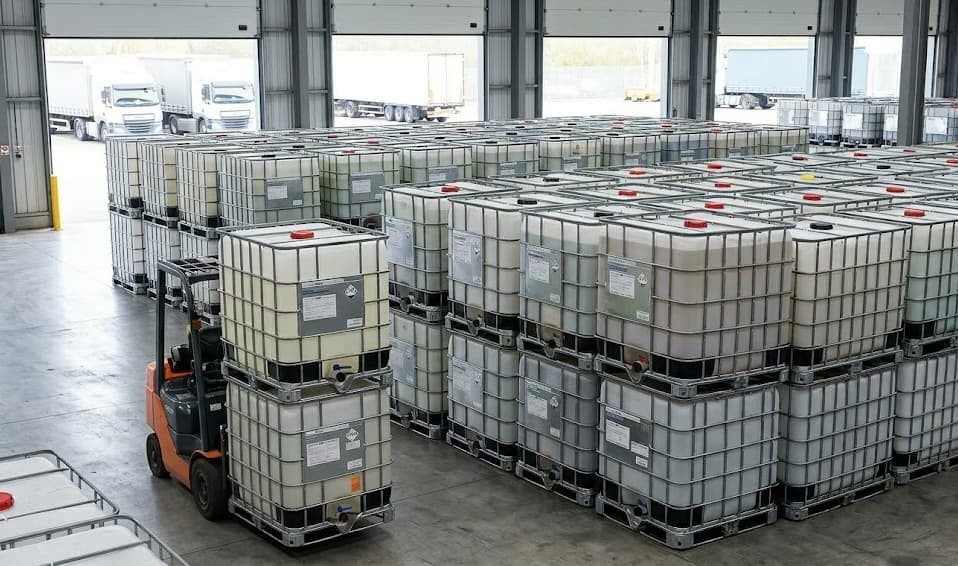
The valve at the bottom of an IBC tote might seem like a minor component, but it's actually the part you interact with most frequently and the one most likely to fail. Choosing the right valve type for your application — and maintaining it properly — is critical for leak-free operation, efficient dispensing, and safe handling. This guide covers every valve type you'll encounter.
The Standard 2-Inch DN50 Outlet
Nearly all IBC totes sold in North America use a 2-inch (DN50) outlet thread — specifically, the S60x6 coarse thread (also called "IBC thread" or "60mm coarse thread"). This standardization means valves are interchangeable across manufacturers and tote brands. However, the valve mechanism itself varies significantly.
Butterfly Valve (Most Common)
The butterfly valve is the standard valve shipped with most new IBC totes. It uses a circular disc that rotates 90 degrees within the valve body to open or close flow. A handle on the outside indicates position — perpendicular to flow means closed, parallel means open.
Advantages include low cost (typically $15-$30 for replacement), lightweight, quick quarter-turn operation, and wide availability. Disadvantages include not perfectly leak-tight when closed (minor seepage can occur over time), the disc slightly obstructs flow even when fully open reducing flow rate by 15-20%, and they're not suitable for high-viscosity products that can trap on the disc.
Best applications: water-based products, thin chemicals, moderate-viscosity liquids, applications where occasional dripping is acceptable.
Ball Valve
Ball valves use a sphere with a hole through the center. When the hole aligns with the pipe, flow passes through. When rotated 90 degrees, the solid portion of the ball blocks flow completely. This design provides a true full-bore opening with zero flow restriction.
Advantages include excellent seal with virtually zero leakage, full-bore unrestricted flow (no flow reduction), better handling of viscous products, and longer service life. Disadvantages include higher cost (typically $30-$60), slightly heavier, and more complex internal mechanism.
Best applications: viscous products (oils, syrups, resins), products that crystallize or solidify, applications requiring absolute zero-leak performance, food-grade applications where contamination from leakage is unacceptable.
Cam Lock (Quick-Connect) Valve
Cam lock valves combine a ball or butterfly mechanism with a standardized quick-connect coupling. They allow tools-free connection and disconnection of hoses, pumps, and transfer equipment. The cam lock standard (Mil-C-27487) ensures universal compatibility across manufacturers.
Advantages include rapid connection and disconnection of transfer equipment, standardized across the industry, available in many materials (brass, stainless, polypropylene), and seals with a simple gasket. Disadvantages include more expensive than basic valves (typically $40-$80), the cam arms can be accidentally opened if bumped, and they require matching adapters on all transfer equipment.
Best applications: operations requiring frequent hose connections, tanker transfer applications, and any operation where speed of connection matters.
Stainless Steel Valve
Available in butterfly, ball, or cam lock configurations, stainless steel valves are specified when material compatibility demands it. Standard valves use polypropylene or nylon bodies which can be attacked by certain chemicals.
Advantages include resistance to corrosive chemicals that attack plastic, higher temperature tolerance, and longer service life in demanding environments. Disadvantages include significantly higher cost (typically $75-$200) and added weight.
Best applications: strong acids or bases, hot liquids above 140F, solvents that attack polypropylene, pharmaceutical applications requiring sterilization.
Maintenance for All Valve Types
Regardless of which valve type you use, follow these maintenance practices: inspect gaskets and O-rings monthly for wear, lubricate threads with food-grade silicone quarterly, exercise the valve through full range even when not in use to prevent seizing, replace gaskets at the first sign of leakage rather than over-tightening, clean threads and mating surfaces during every container cleaning, and store with the valve in the closed position to protect the sealing surfaces.
Choosing the Right Valve
For most general industrial applications, the standard butterfly valve that comes with the tote is perfectly adequate. Only upgrade when you have a specific need that the butterfly can't meet — whether that's zero-leak requirement, high viscosity products, rapid connection needs, or chemical compatibility concerns.
When in doubt, a ball valve is the safest upgrade. It handles everything a butterfly does, plus provides better sealing and full-bore flow. The incremental cost is modest relative to the value of the tote and its contents.
Contact IBC Recycling Detroit for replacement valves in all types and sizes. We stock the most common configurations and can order specialty valves with short lead times.