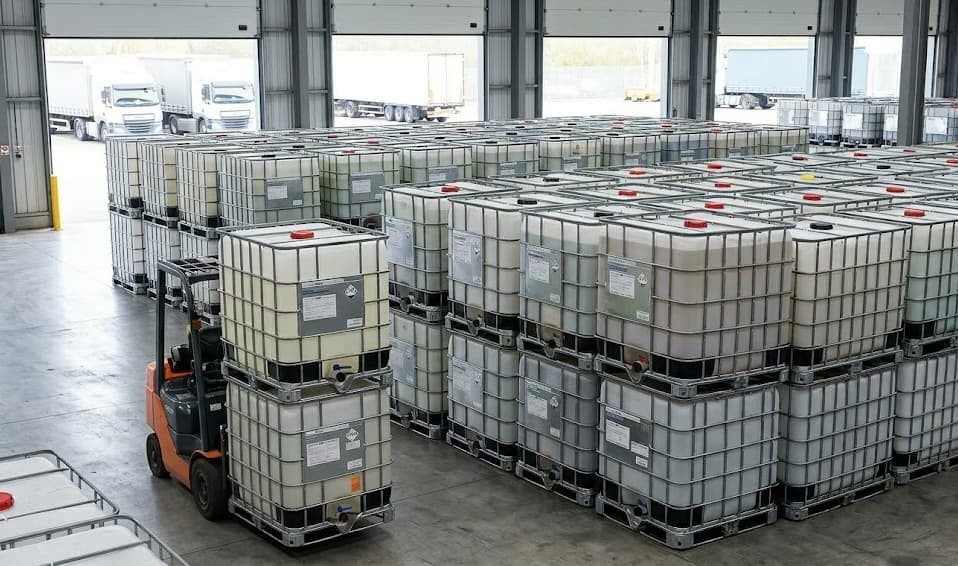
An IBC tote is an investment, whether you buy new at $350+ or reconditioned at $140+. The difference between getting a 2-year return and a 7+ year return on that investment comes down to a handful of practices that cost almost nothing to implement. Here's a systematic approach to maximizing the life and value of every container in your fleet.
Understanding the Lifespan Equation
An IBC tote's useful life is determined by four factors: physical wear from filling, emptying, and handling cycles. Chemical degradation from the products stored. Environmental exposure to UV, temperature extremes, and weather. And mechanical damage from forklifts, stacking, and transport.
You can control all four of these factors. The totes we see that last 7+ years aren't built differently from those that fail at 2 years — they're simply treated differently.
Practice 1: Product Compatibility Management
Not all products are equally hard on HDPE. Some are essentially inert (water, dilute salts, most foods) and cause negligible degradation even over years of exposure. Others (strong solvents, oxidizing acids, hot oils above 140F) actively attack the polymer structure with every day of contact.
Maintain a compatibility chart for every product you store in IBCs. The IBC manufacturer can provide specific resistance data for their resin grade. For products with moderate compatibility, limit residence time — don't let them sit in the container for months when they could be transferred or consumed within weeks.
The single biggest life-shortening factor we see is storing stress-cracking agents (particularly surfactant-containing products like detergents, cleaners, and wetting agents) at elevated temperatures. This combination can cut bottle life from 7+ years to 18 months. If you must store these products, keep temperatures below 100F and plan for more frequent container rotation.
Practice 2: UV Protection
UV radiation breaks polymer chains. There's no way to reverse this process once it's occurred. Every hour of direct sunlight exposure reduces remaining bottle life. This is true even in Michigan's relatively low-UV climate — cumulative exposure over months and years adds up.
If indoor storage is impossible, implement these UV protection measures: use opaque covers or tarps over outdoor IBCs (not clear plastic which offers no UV protection), position outdoor IBCs under overhangs, trees, or shade structures when possible, prioritize blue or black bottles for outdoor applications as they contain UV-absorbing pigments, rotate outdoor stock so no single tote receives more than 12 months cumulative outdoor exposure, and consider UV-protective cage wraps that slide over the entire unit.
The cost of a $50 UV cover versus the cost of replacing a $140+ tote after premature UV failure makes this the highest-ROI preventive measure available.
Practice 3: Temperature Management
HDPE becomes more brittle at cold temperatures and more susceptible to creep and deformation at high temperatures. The ideal storage range is 40-100F. Outside this range, the following precautions apply:
Below freezing: never impact or drop a cold tote — the plastic may crack rather than flex. Never attempt to unstack frozen IBCs by driving forklifts aggressively into pallet slots. Allow totes to warm gradually before handling if they've been below 0F for extended periods.
Above 120F: product weight creates hydrostatic pressure that can permanently deform a hot bottle. Never store full IBCs in direct summer sun where surface temperatures can reach 150F+. If hot storage is unavoidable, reduce fill levels to 80% maximum.
Practice 4: Proper Handling Procedures
Train everyone who operates forklifts near IBCs in proper approach angles and speeds. The overwhelming majority of premature tote retirements we process are from forklift damage — punctures, cage dents, pallet splits. These are 100% preventable with proper training and awareness.
Specific handling practices that extend life: approach pallets straight-on (never at an angle), lift slowly and verify tines are fully engaged before driving, never push one IBC with another using forklifts, use fork extensions if needed for 48-inch-deep pallets, and never drag IBCs across concrete or asphalt.
Practice 5: Proper Stacking
Most IBC manufacturers rate their products for 2-high stacking when full or 4-high when empty. Exceeding these limits causes gradual cage deformation that eventually damages the bottle. Even within rated limits, ensure the upper IBC is centered precisely on the lower one with even weight distribution. Use stacking frames if your containers don't have integrated stacking features.
Practice 6: Fleet Rotation
If you maintain multiple IBCs in inventory, implement a first-in-first-out (FIFO) rotation system. This ensures all totes receive approximately equal use and age, rather than some sitting idle for years while others are cycled repeatedly. Equal wear distribution means your entire fleet reaches end-of-life at roughly the same time, allowing efficient batch replacement rather than constant individual failures.
Practice 7: Proactive Maintenance
Schedule quarterly inspections for your entire IBC fleet, not just when you notice a problem. Replace gaskets on a calendar schedule (annually) rather than waiting for leaks. Touch up cage zinc coating where corrosion appears before it progresses. Replace damaged pallet boards before they fail under load.
The total annual maintenance cost for a properly managed IBC is approximately $8-$15 per unit — mainly gaskets and occasional valve parts. This investment extends average life by 3-4 years, making it the highest-ROI maintenance program you can implement for any industrial equipment.
The Financial Impact
Let's calculate the difference proper care makes. A $140 reconditioned IBC lasting 2 years (poor care) costs $70 per year. The same tote lasting 7 years (proper care) plus $12 annual maintenance costs $32 per year. That's a 54% reduction in annual container costs — achievable through practices that cost almost nothing except attention and discipline.
For a fleet of 50 IBCs, that's $1,900 saved annually. Over 5 years, $9,500 saved. For larger fleets, the savings scale proportionally.
When It's Time to Let Go
Despite best practices, every tote eventually reaches the end of its useful life. Knowing when to retire a container prevents safety incidents and product losses that can dwarf the replacement cost. Retire immediately if you see any crack (no matter how small), permanent deformation, UV brittleness, or stress whitening.
When retirement time comes, contact IBC Recycling Detroit. We'll buy your end-of-life containers for material recycling value, ensuring the HDPE, steel, and pallet materials continue their useful life in new forms.