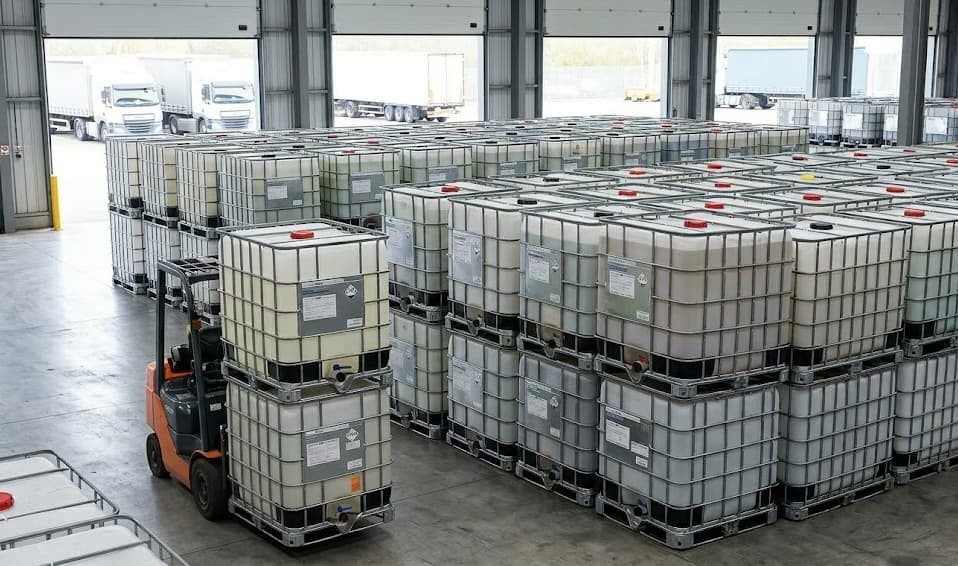
A well-maintained IBC tote can serve you through 5 to 7 fill cycles before needing replacement or full recycling. Proper cleaning between uses is the single most important factor in maximizing this lifespan. This guide will walk you through everything you need to know to keep your containers in top condition.
Before You Start: Safety First
Never begin cleaning an IBC tote without first consulting the Safety Data Sheet (SDS) for the previous contents. Some residues require special handling, PPE, or neutralization before cleaning can begin safely. At minimum, you should always wear chemical-resistant gloves (nitrile or PVC), safety goggles or a face shield, a chemical-resistant apron, and steel-toed boots. If the previous contents were volatile or toxic, additional respiratory protection may be required.
Step-by-Step Cleaning Process
Step 1: Drain Completely
Open the bottom valve fully and tilt the tote slightly (5-10 degrees) toward the valve to ensure complete drainage. Allow at least 30 minutes for viscous products to flow out completely. For products like corn syrup, glycerin, or heavy oils, you may need several hours. Capture all residual material for proper disposal — never drain onto the ground or into storm drains.
Step 2: Initial Rinse
Using warm water (100-120 degrees F), fill the tote approximately 25% full through the top opening. Close the lid and rock the tote gently to loosen residue from all interior surfaces, paying special attention to corners where material accumulates. Drain through the bottom valve. Repeat 2-3 times until the rinse water runs mostly clear.
Step 3: Detergent Wash
For most common residues, a solution of warm water (140-160 degrees F) and alkaline cleaner (pH 11-13) works effectively. Fill the tote 30-40% with this solution, seal the lid, and agitate vigorously if possible. For stationary cleaning, allow a soak time of 30-60 minutes.
Common effective cleaners include sodium hydroxide (caustic soda) at 2-5% concentration for organic residues, phosphoric acid at 1-3% for mineral scale and inorganic deposits, enzymatic cleaners for protein-based residues like dairy and food products, and solvent-based cleaners for petroleum products which require adequate ventilation.
Step 4: Hot Rinse
After draining the detergent solution, rinse with hot water (160-180 degrees F) to remove all cleaning agent residue. This step is critical — leftover cleaning chemicals can contaminate the next product loaded into the tote, potentially ruining an entire batch. Rinse at least twice, and check the pH of the final rinse water to confirm neutrality.
Step 5: Sanitize (Food-Grade Only)
For totes that will be reused with food-contact products, a sanitizing step is required after cleaning. Common sanitizers include peracetic acid (PAA) at 100-200 ppm, chlorine dioxide at 50-100 ppm, or hot water above 180 degrees F for 5+ minutes. Allow the sanitizer appropriate contact time before draining. Document the sanitization for compliance records.
Step 6: Dry Thoroughly
Invert the tote or leave the valve open in a clean, ventilated area until completely dry. Moisture remaining inside can promote bacterial growth, cause rust on metal components, or contaminate the next fill product. Forced air drying with industrial fans accelerates this process significantly and is recommended for high-throughput operations.
Valve Maintenance
The bottom valve is the most failure-prone component of an IBC tote. After every cleaning cycle, you should remove the valve assembly completely, inspect the gasket and O-ring for wear, cracking, or swelling, clean all threads and mating surfaces, replace gaskets at any sign of deterioration, lubricate threads with food-grade silicone grease, and reassemble and test for leaks with water before refilling.
Replacement valve gaskets cost $2-5 each — far cheaper than a failed seal and product loss during transport, which can easily run into thousands of dollars in cleanup costs and lost material.
Common Mistakes to Avoid
Over our years in the business, we see the same cleaning mistakes repeatedly. Using water that is too hot (above 190F) can warp HDPE plastic. Using chlorine bleach regularly will degrade the plastic over time. Pressure washing the exterior cage while the bottle is in place can dent or puncture the bottle if the nozzle gets too close. Storing totes wet in sealed conditions creates mold and bacterial growth. Skipping the rinse step after alkaline cleaning leads to residue that crystallizes and becomes very difficult to remove later.
Storage Best Practices
When storing cleaned IBC totes between uses, keep them with the valve closed but lid slightly loose to allow air circulation. Store out of direct sunlight because UV degrades HDPE over time, accelerating brittleness. Store on a level surface to prevent cage warping. Do not stack full totes more than 2 high. Empty totes can be stacked 4 high maximum. Protect from freezing if any moisture remains inside.
When to Retire an IBC Tote
Even with perfect maintenance, IBC totes have a finite lifespan. Replace or recycle a tote if you observe cracks, crazing, or stress whitening in the bottle, permanent warping or bulging, structural damage to the cage such as broken welds or severe bending, persistent odor that cannot be removed by cleaning, UV yellowing or brittleness of the plastic, or expired UN certification for hazmat applications.
When it's time to retire a tote, contact IBC Recycling Detroit for responsible recycling or rebottling services. We'll ensure every component is properly processed.